In the bustling pace of modern life, finding moments of tranquility can seem like a distant dream. However, one of the simplest and most effective tools for cultivating inner peace is right under our noses—our breath. Mindful breathing, an age-old practice rooted in ancient traditions, offers profound benefits for mental clarity and stress reduction, serving as a cornerstone for a balanced and harmonious life.
At its core, mindful breathing involves paying deliberate attention to the breath, fostering a state of present-moment awareness. This form of focused attention helps in anchoring the mind, reducing the chatter of intrusive thoughts, and creating a space of calm within the chaos. As our attention follows the natural rhythm of inhalation and exhalation, we begin to cultivate a deeper connection with ourselves, allowing for a more profound sense of awareness and presence to emerge.
The impact of mindful breathing on mental clarity is profound. By consciously regulating our breathing, we engage our parasympathetic nervous system, which induces relaxation and supports cognitive functions. This physiological shift enhances our ability to concentrate, think clearly, and make decisions with greater ease. The mind becomes a clearer space, free from the fog of stress and anxiety, which often hinders our ability to navigate daily challenges and make informed choices.
Moreover, mindful breathing acts as a powerful antidote to stress. When we face stressful situations, our bodies instinctively enter a 'fight or flight' mode, characterized by shallow, rapid breathing. Mindful breathing counteracts this response by promoting slower and deeper breaths, facilitating a relaxation response. This not only alleviates immediate stress but also equips us with a tool to manage anxiety proactively. Regular practice can transform our relationship with stress, turning it from a debilitating force into a manageable component of life.
Incorporating mindful breathing into a yoga practice can further amplify its benefits. Yoga, a holistic discipline that unites the mind, body, and spirit, is inherently connected to the breath. Each movement and posture, or asana, is synchronized with the breath, creating a flow that enhances physical and mental well-being. By integrating mindful breathing techniques into yoga, practitioners deepen their connection between mind and body, leading to a more enriched experience. The breath becomes a guide, aiding in maintaining focus, balance, and stability during poses, while also promoting relaxation and inner peace.
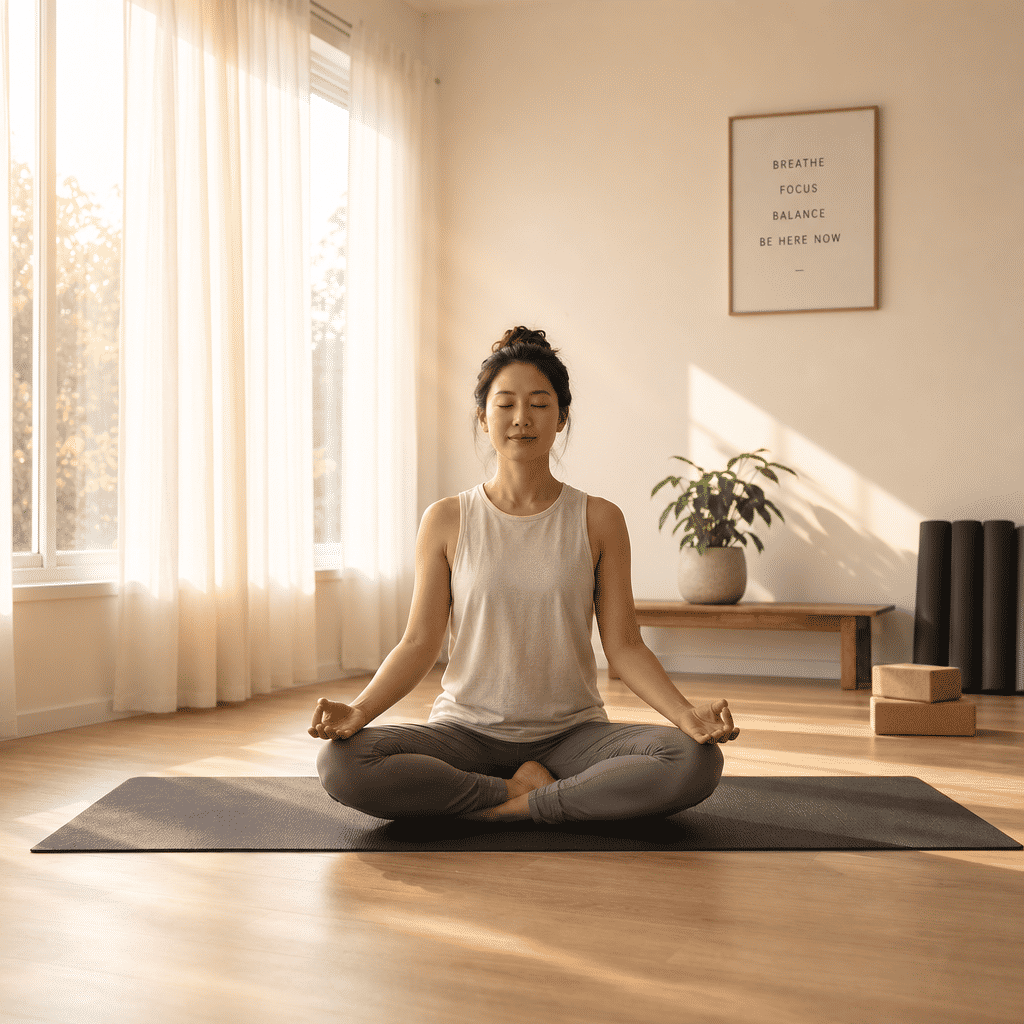
To begin a mindful breathing practice, find a quiet space and sit comfortably. Close your eyes and take a few deep, cleansing breaths. Then, allow your breath to settle into its natural rhythm. As you inhale, visualize the breath filling your lungs and invigorating your body. As you exhale, imagine releasing tension and stress. If your mind wanders, gently redirect your focus to the sensation of the breath, accepting that this is part of the process.
In conclusion, mindful breathing is a simple yet transformative practice that can significantly enhance mental clarity and reduce stress. By integrating this practice into daily life and yoga routines, we open the door to a path of inner peace and well-being. In the grand tapestry of life, the breath serves as a continuous thread, weaving moments of mindfulness and serenity into everyday existence. Through mindful breathing, we discover that peace is not a distant destination but a state of being that resides within each breath we take.